
Wholesale pet toys offer retailers and distributors an opportunity to serve a market driven by the everyday bond between pets and their owners. From a simple ball that encourages a dog to play to an interactive toy that keeps a pet engaged while its owner is busy, the right products can bring practical value to customers and create repeat sales opportunities for retailers.
However, choosing wholesale pet toys involves more than finding products at a competitive price. Buyers need to consider product quality, target customers, retail pricing, inventory turnover, packaging, and the level of differentiation each product brings to the shelf.
For pet stores, wholesalers, distributors, and online sellers, a well-planned product range should balance accessible everyday toys with interactive and technology-oriented options. This guide explains five practical ways to select wholesale pet toys, evaluate suppliers, and build a product assortment that fits your business goals.
Why Wholesale Pet Toys Matter for Retailers
Pet toys serve different purposes in a household. Some encourage physical play, while others provide mental engagement or give owners a convenient way to interact with their dogs. These everyday use cases make dog toys and interactive pet toys relevant to a wide range of customers.
For retailers, the opportunity is not simply to stock as many products as possible. It is to understand why customers buy them. A first-time pet owner may prefer an affordable, easy-to-use toy. A busy household may be interested in interactive products that add variety to a dog’s daily routine. A customer looking for a more technology-focused gift may consider an automatic ball launcher or a pet robot with a camera.
This variety gives wholesale pet toys suppliers and buyers room to develop different price points and product categories. It also means that product selection should reflect the store’s audience rather than follow trends without evaluating demand.
A successful wholesale pet toys assortment combines clear product benefits, reliable supply, suitable pricing, and a shopping experience that helps customers understand which toy fits their needs.
1. Choose Wholesale Pet Toys Based on Your Target Customers
Before placing a bulk order, identify the customers your store wants to reach. A neighborhood pet shop, an online pet retailer, a distributor, and a premium pet boutique may require different product assortments.
For example, customers shopping for everyday play may respond well to simple, easy-to-understand toys. Online buyers may be more interested in products that demonstrate their features clearly through photos and short videos. Premium retailers may prefer distinctive interactive products that give customers a reason to explore beyond basic toys.
When evaluating wholesale pet toys, consider the intended pet size, play style, product dimensions, material, ease of use, and storage requirements. Clear product information also helps retail staff answer questions and helps online shoppers make more informed decisions.
Price positioning matters, too. An assortment with only low-priced toys may limit opportunities to serve customers seeking more advanced features. On the other hand, stocking too many expensive products before demand is established can tie up working capital.
A balanced wholesale pet toys strategy starts with the customer and works backward to the product. Review your existing sales, customer feedback, and product-page performance before deciding which categories deserve more inventory.
2. Balance Everyday Dog Toys with Interactive Products
A strong product range should not depend on a single type of toy. Everyday dog toys can serve customers looking for straightforward play options, while interactive pet toys provide additional ways to engage pets and their owners.
Interactive products can also create stronger visual content for ecommerce stores. Demonstrations showing a toy in use may help customers understand its purpose more quickly than a product photo alone.
For B2B buyers, the key is to assess whether a product offers a clear reason to buy. Consider its functionality, durability, ease of cleaning where applicable, packaging, and the quality of the product demonstration. A longer feature list does not automatically make a product more attractive to customers.
Automatic Dog Ball Launchers for Active Play
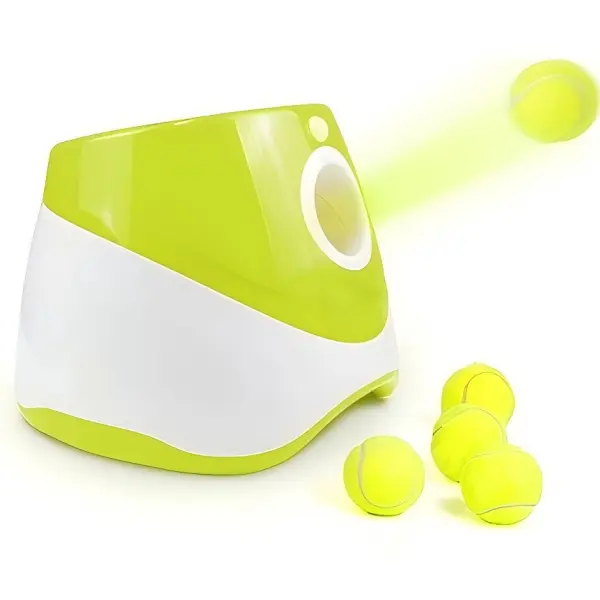
An automatic dog ball launcher can add a more specialized option to a wholesale dog toys assortment. Rather than relying entirely on basic throw-and-fetch toys, retailers can offer a product designed to make repeated ball-launching play more convenient for owners.
This category may appeal to customers looking for interactive play at home or in suitable outdoor spaces. Buyers should review the launch distance, ball compatibility, operating requirements, size recommendations, and safety instructions before selecting a model.
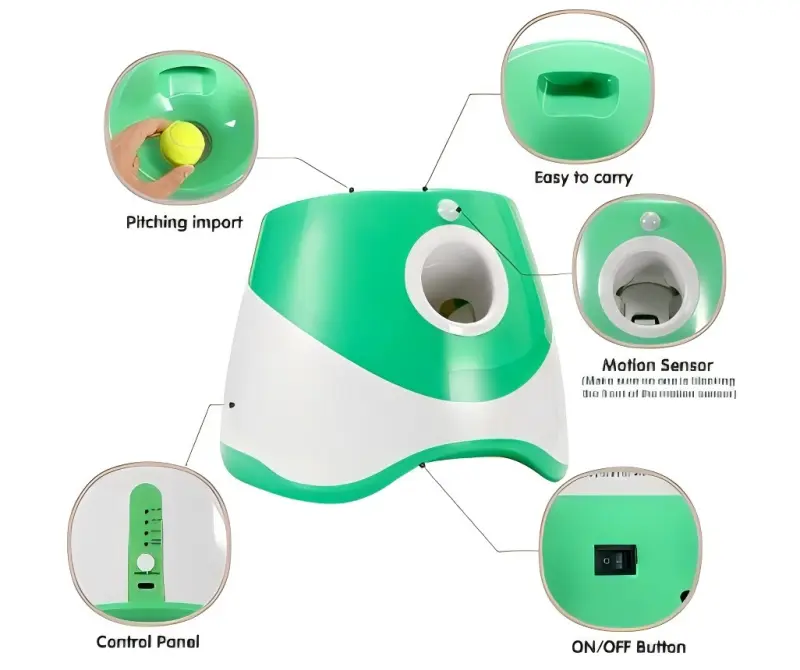
For wholesale buyers, the Automatic Dog Ball Launcher is worth evaluating as a higher-feature product within a broader dog toy range. Its suitability depends on the target market, retail price, product demonstration quality, and the supplier’s ability to provide consistent specifications and packaging.
Retailers should also ensure that product instructions explain appropriate supervision and safe use. Clear guidance helps customers understand the product and supports more responsible product positioning.
Interactive Pet Balls for Everyday Engagement
Interactive pet balls provide another option for retailers who want to expand beyond conventional toys. Their appeal lies in offering a different play experience in a compact product format.

The Interactive Pet Ball can be considered for stores targeting customers interested in interactive play and convenient pet accessories. Before purchasing in bulk, buyers should confirm the operating mode, charging or battery requirements, materials, dimensions, cleaning instructions, and suitability for the intended pet.
Compared with larger automated toys, compact interactive pet toys may be easier to display and ship, depending on their packaging and design. This can make them useful candidates for online product testing or for retailers looking to introduce a new category without committing their entire budget to one product type.
The most effective wholesale pet toys range is not necessarily the one with the most features. It is the one in which each product has a clear role, a defined customer, and a price point that fits the overall assortment.
3. Evaluate Smart Pet Toys for Differentiation
Technology-oriented pet products can help retailers develop a more distinctive assortment. However, buyers should distinguish between features that look impressive in a demonstration and features that customers will genuinely find useful.
A smart product should communicate its value clearly. Buyers need to understand how it works, what equipment or connectivity it requires, how it is maintained, and what limitations customers should know before purchasing.

A pet robot with a camera combines interactive features with remote viewing capabilities, depending on the model. For customers who want to observe their pets or interact with them while away from home, this type of product offers a different proposition from a conventional dog toy.
These details matter commercially because smart products may require more customer education than basic toys. Clear setup instructions, accurate product demonstrations, and responsive after-sales support can help retailers manage buyer expectations.
For distributors and online sellers, smart pet robots may also provide opportunities for demonstration-led marketing. Short videos can show the product’s actual functions and help potential customers understand how it fits into everyday pet ownership.
Nevertheless, smart pet products should complement rather than automatically replace traditional toys. Different customers have different budgets and preferences, so a mix of product types can make the overall wholesale pet toys assortment more accessible.
4. Compare Quality, Cost, and Supplier Reliability
The lowest unit price is not always the best purchasing decision. A product with inconsistent quality, unclear specifications, or unsuitable packaging can create additional costs through returns, complaints, damaged inventory, and customer-service work.
When comparing wholesale pet toys suppliers, look beyond the initial quotation. Ask how materials and product specifications are documented, whether samples are available, how production quality is checked, and whether the supplier can maintain consistent specifications across repeat orders.
Packaging deserves particular attention. Retail-ready packaging can support shelf presentation, while compact and protective packaging may help online sellers manage storage and shipping. Buyers should also confirm carton dimensions, shipping weight, packaging customization options, and any labeling requirements relevant to their market.
MOQ is another important factor. A low MOQ can make it easier to test a new product, while larger orders may offer different unit-price terms. The right quantity depends on expected demand, available storage, cash flow, and replenishment lead time.
A practical way to evaluate wholesale pet toys is to compare the full landed cost rather than the factory price alone. Include product cost, packaging, freight, import duties where applicable, inspection, and expected costs associated with returns or replacements.
A supplier that communicates clearly and provides reliable documentation can make procurement easier to manage. For growing retailers, that reliability may be just as important as a small difference in unit price.
5. Test Market Demand Before Expanding Your Inventory
Even an appealing product needs evidence of customer interest. Instead of committing a large budget to every new category, retailers can test a small selection of wholesale pet toys and monitor performance before expanding their orders.
Start with a manageable assortment that includes different product types and price points. Track product-page views, add-to-cart activity, conversion rates, customer questions, returns, and actual sales. These signals can help identify which products deserve further investment.
For online sellers, product videos and comparison content can reveal whether customers understand the product’s features. For physical stores, staff feedback and customer questions may show where product descriptions or packaging need improvement.
Testing is particularly valuable for interactive pet toys and smart products, because customers may need more information before making a purchase. If a product attracts attention but does not convert, investigate its pricing, product images, feature explanations, shipping cost, and reviews before concluding that demand is weak.
Wholesale pet toys buyers should also consider seasonality and promotional timing. Gift-oriented products may attract more attention during certain shopping periods, while everyday toys can support a more consistent product offering. Actual demand will vary by market, so use sales data rather than assuming that every trend will translate into revenue.
The goal is to build an assortment based on evidence. Small, measured tests can help retailers reduce inventory risk and make more confident decisions about future bulk purchases.
Why Play Value and Responsible Use Matter
Commercial product selection should also account for how pets and owners use toys in real life. A product may have attractive packaging and advanced features, but customers still need to understand how to use it appropriately.
The RSPCA’s guidance on [dog training and reward-based learning] explains how toys, food, and praise can be used as rewards during training. This is a useful reminder that a toy’s value often depends on the interaction it supports, not just its physical design.
For retailers, this perspective can inform product descriptions and educational content. Rather than promising that a toy will solve behavioral problems, explain its intended play function and provide practical instructions. Avoid unsupported claims about treating anxiety, preventing medical conditions, or guaranteeing behavioral outcomes.
When selecting wholesale pet toys, buyers should therefore consider age and size recommendations, supervision requirements, durability, and any small components that may present a choking risk. Product safety information should be clear, accurate, and appropriate for the intended market.
Responsible product communication helps retailers build customer trust while keeping marketing claims grounded in the product’s actual capabilities.
Build a More Balanced Wholesale Pet Toys Range with Fortkunpet
Choosing wholesale pet toys is ultimately about matching customer demand with a practical sourcing strategy. Retailers need products that fit their price range, distributors need consistent supply, and online sellers need clear features that can be communicated effectively through product pages and demonstrations.
Fortkunpet offers several product types worth evaluating for a varied pet toy assortment, including the Automatic Dog Ball Launcher, Interactive Pet Ball, and Automatic Pet Robot with Camera. These products represent different approaches to play and interaction, allowing B2B buyers to compare their suitability for different customer groups.
Before placing a bulk order, review the specifications, sample availability, MOQ, packaging, production lead time, and customization options for each product. Confirm all feature claims and applicable compliance requirements with the supplier rather than relying on assumptions based on product category alone.
A thoughtful wholesale pet toys strategy does not depend on chasing every new trend. It combines recognizable everyday products with selected interactive options, tests new items against real demand, and builds supplier relationships that can support repeat purchasing.
For retailers, wholesalers, distributors, and ecommerce sellers, the next step is to identify the products that best fit their customers and request the information needed to evaluate them. Contact Fortkunpet to discuss product specifications, samples, bulk purchasing, and sourcing options for your pet product business.