OEM vs ODM Pet Products is an important decision for retailers, distributors, wholesalers, Amazon sellers, and private-label pet brands planning a new product line. The choice between OEM and ODM can affect product development, customization, MOQ, production cost, launch speed, packaging, and long-term market positioning.
For B2B buyers, OEM vs ODM Pet Products is not simply a question of which manufacturing model is better. The right choice depends on how much customization your business needs, how quickly you want to launch, and whether the product needs to be differentiated from existing products in the market.
This guide explains the difference between OEM pet products and ODM pet products and provides three practical strategies to help buyers choose the right model.
What Is the Difference Between OEM and ODM Pet Products?
Before comparing OEM vs ODM Pet Products, it is important to understand how the two manufacturing models work.
OEM pet products are developed according to the buyer’s own requirements, specifications, design, or product concept. The manufacturer handles production based on those requirements. This approach gives B2B buyers more control over product structure, dimensions, materials, functions, packaging, and other product details.
ODM pet products, on the other hand, are generally based on products or designs already developed by the manufacturer. Buyers can often customize elements such as branding, packaging, colors, or selected product specifications without developing the entire product from the beginning.
The main difference in OEM vs ODM Pet Products is therefore the level of product development involved.
OEM is usually more suitable when a buyer has a specific product concept or needs meaningful product differentiation. ODM can be more practical when the buyer wants to launch an existing product concept faster and reduce the development workload.
For B2B buyers, understanding this difference before requesting a quotation can make communication with a pet product manufacturer much more efficient.
OEM vs ODM Pet Products: Which Model Is Better for Your Business?
There is no universal answer to the question of OEM vs ODM Pet Products. Different businesses have different product strategies.
A new retailer testing a category may prefer ODM pet products because the existing product structure can shorten the development process. A private-label brand with a clear product concept may prefer OEM pet products because greater customization can help create a more distinctive product.
The decision should also consider MOQ, sampling, tooling, packaging, production lead time, logistics, and expected market demand.
In other words, the best choice in OEM vs ODM Pet Products should be based on the complete product investment rather than the factory unit price alone.
Strategy 1: Choose ODM When Speed and Flexibility Matter
One of the main advantages of ODM pet products is the ability to start with an existing product design.
For B2B buyers entering a new category, this can be useful because product development does not always need to start from zero. An existing product platform can be evaluated, sampled, branded, packaged, and prepared for a target market.
For example, the Stainless Steel Pet Water Fountain can be considered when developing a branded pet hydration product line. The product uses stainless steel and ABS construction, with a 4L capacity and rechargeable power design. For B2B buyers, the focus may be on branding, packaging, market positioning, and order planning rather than completely redesigning the product.
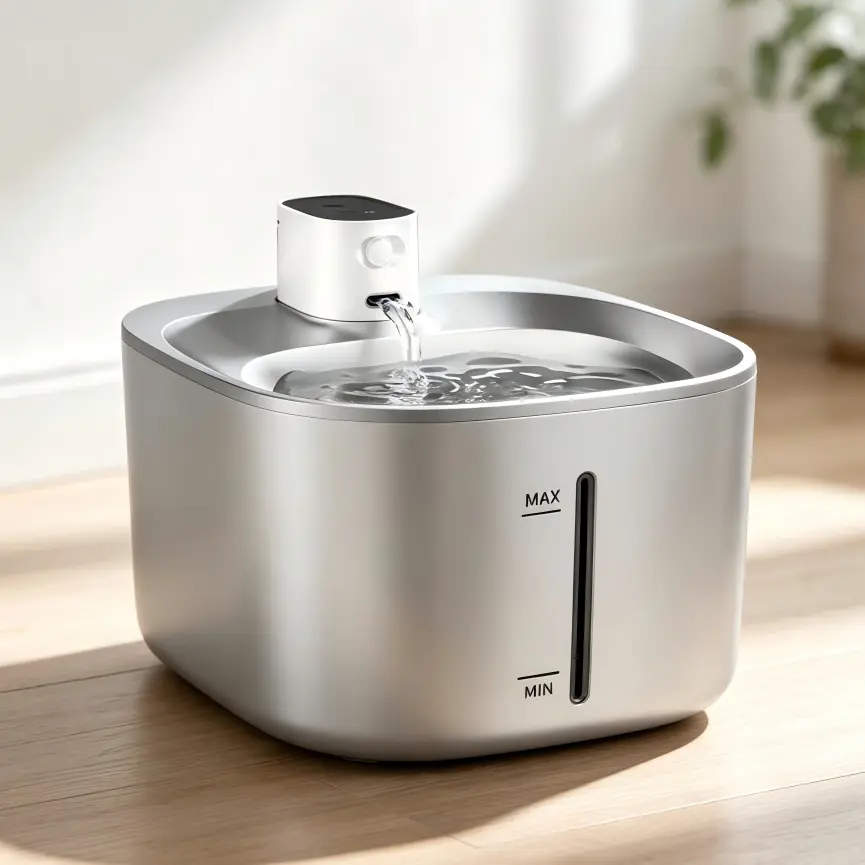
This makes ODM pet products particularly useful for businesses that want to test demand before making a larger product-development investment.
When comparing OEM vs ODM Pet Products, ODM can therefore be a practical starting point for retailers and online sellers that prioritize launch speed and manageable development costs.
At the same time, ODM does not mean that every product must remain unchanged. Depending on the manufacturer’s capabilities, buyers may be able to discuss logo, packaging, colors, specifications, or other selected customization requirements.
Strategy 2: Choose OEM When Product Differentiation Matters
OEM pet products become more attractive when a standard product cannot fully meet your market requirements.
Suppose a retailer needs a pet playpen with specific dimensions because of limited store space or a particular target market. In this situation, simple branding may not be enough. The product itself needs to be adjusted.
The Eco-Friendly HDPE Dog Playpen is a useful example. Its modular structure makes it suitable for puppies, cats, and other small pets, while size customization allows B2B buyers to develop a configuration that better fits their product positioning.

This is where OEM pet products can provide greater flexibility.
Instead of simply putting a logo on an existing product, OEM manufacturing can allow buyers to communicate requirements related to dimensions, structure, materials, functions, packaging, and other specifications.
For brands that want to build a differentiated product portfolio, OEM vs ODM Pet Products becomes a strategic decision rather than a simple purchasing decision.
OEM can require more communication, sampling, development time, and potentially higher initial costs. However, the additional investment may be worthwhile when product differentiation is an important part of the brand strategy.
Strategy 3: Use OEM and ODM Pet Products Together
B2B buyers do not always need to choose only one manufacturing model.
A more flexible approach is to use both OEM pet products and ODM pet products within the same product portfolio.
For example, a retailer could use ODM pet products for products that need to enter the market quickly, while using OEM pet products for key products that require stronger differentiation.
This approach can reduce unnecessary development costs while still creating opportunities for custom product development.
The Smart Dog Grooming Brush is an example of a technology-oriented pet product that can be evaluated as part of a smart grooming category. Features such as a spray function, rechargeable design, and additional smart functions can create opportunities for different product positioning. Before selecting an OEM or ODM route, buyers should first determine which features actually matter to their target customers.

The same principle applies to the Solar-Powered Pet Tracker Harness. Technology-focused products require buyers to pay closer attention to specifications such as battery capacity, connectivity, tracking functions, charging methods, software compatibility, and applicable compliance requirements.
For these products, OEM vs ODM Pet Products should be evaluated according to the complexity of the product and the amount of customization required.
OEM vs ODM Pet Products: What About Cost?
Cost is one of the most important considerations when comparing OEM vs ODM Pet Products, but unit price should not be the only factor.
OEM pet products may involve additional development, sampling, tooling, testing, or engineering costs. ODM pet products may have lower development requirements because the manufacturer already has an existing product design.
However, a lower development cost does not automatically mean a lower total purchasing cost.
B2B buyers should consider the complete cost structure, including sample fees, MOQ, packaging, customization, production, shipping, inspection, and inventory.
Market demand also matters.
A product with a higher development cost may make sense if it offers stronger differentiation and a clearer market position. Meanwhile, an ODM product may be a better option for a new seller who wants to test a product category with lower initial development risk.
Therefore, when evaluating OEM vs ODM Pet Products, buyers should compare total investment and expected market potential rather than focusing only on the factory quotation.
MOQ, Samples, and Production: What Should B2B Buyers Ask?
MOQ is another important part of the OEM vs ODM Pet Products decision.
ODM pet products may be easier to sample because the basic product has already been developed. OEM pet products can require more detailed communication before a final sample is produced, especially when the buyer requests changes to dimensions, materials, structure, or functions.
Before placing an order, B2B buyers should ask the manufacturer about sample availability, MOQ, production lead time, packaging options, customization requirements, and quality-control procedures.
It is also important to clarify whether the quoted MOQ applies to the complete product or only to specific customized components such as packaging or printed logos.
For OEM pet products, buyers should also confirm whether tooling or development fees are required. For ODM pet products, buyers should clarify which parts of the existing design can be customized.
Clear communication at this stage can prevent unexpected costs and production delays later.
How to Choose Between OEM and ODM Pet Products
The choice between OEM vs ODM Pet Products can be simplified by looking at three business priorities: speed, customization, and differentiation.
If your main goal is to launch quickly and test a market, ODM pet products may be the more practical option. You can start from an existing product concept and focus on branding, packaging, positioning, and sales.
If your product requires specific dimensions, functions, materials, or structural changes, OEM pet products may provide greater flexibility.
If your business has a broad product portfolio, combining OEM and ODM pet products can create a more balanced sourcing strategy.
This approach is particularly useful for retailers and distributors that need both fast-moving standard products and differentiated products for their own brands.
Why Product Understanding Still Matters
The decision between OEM vs ODM Pet Products should not be based only on manufacturing terminology.
B2B buyers also need to understand how a product will be used by the end customer.
For example, dog-related products should be designed around practical use, safety, convenience, and the needs of both pets and owners. Responsible pet ownership also includes providing appropriate care and considering adoption when bringing a new companion into the family. Resources from organizations such as Best Friends Animal Society can help pet owners learn more about responsible pet adoption and animal welfare.
The RSPCA recommends reward-based approaches and emphasizes making training positive and engaging. Understanding these practical user needs can help retailers choose or develop pet products that fit real customer scenarios.
For businesses developing dog-related products, the IAABC Foundation also discusses planning, space management, timing, and lesson structure in group dog training. These considerations show why product development should begin with the actual user scenario rather than manufacturing specifications alone.
This principle is important when evaluating OEM vs ODM Pet Products. A technically customizable product is not necessarily a commercially useful product unless the customization solves a real customer problem.
OEM vs ODM Pet Products: A Practical B2B Decision
When making an OEM vs ODM Pet Products decision, B2B buyers should start with the market rather than the factory.
Ask what your customers need, how much differentiation your brand requires, how quickly you want to launch, and how much initial investment you can accept.
ODM pet products are often suitable for market testing, faster product launches, and products where extensive customization is unnecessary.
OEM pet products are more suitable when your business needs a specific product concept, customized dimensions, unique functions, or stronger product differentiation.
For many growing brands, the most practical strategy is not choosing OEM instead of ODM. It is using both models at different stages of the product portfolio.
Build Your Custom Pet Product Line With Fortkunpet
Understanding OEM vs ODM Pet Products is the first step toward building a more effective B2B sourcing strategy.
At Fortkunpet, buyers can explore different types of pet products, from everyday accessories to smart pet technology. Depending on the product and project requirements, B2B buyers can discuss product specifications, customization, branding, packaging, samples, and production requirements.
The Eco-Friendly HDPE Dog Playpen is suitable for buyers looking for size customization. The Stainless Steel Pet Water Fountain offers opportunities for logo and packaging customization. Smart products such as the Smart Dog Grooming Brush and Solar-Powered Pet Tracker Harness can also be evaluated according to product specifications, technology requirements, and target-market needs.
Whether you are sourcing ODM pet products for a new category or developing OEM pet products for a private-label brand, the key is to match the manufacturing model with your business goals.
For retailers, distributors, wholesalers, and online sellers, a well-planned OEM vs ODM Pet Products strategy can make product development more efficient and help create a product portfolio that fits the target market.
Ready to discuss your next pet product project? Contact Fortkunpet to discuss OEM, ODM, customization, samples, packaging, and B2B sourcing requirements.